Bogland Rewilding — How Peatland Restoration Is Creating New Habitat for Ireland's Pollinators
There is something quietly extraordinary happening across the Irish midlands. Land that was stripped bare for turf and industrial peat extraction is slowly coming back to life. And as it does, it is becoming some of the most important new habitat for pollinators on the island.
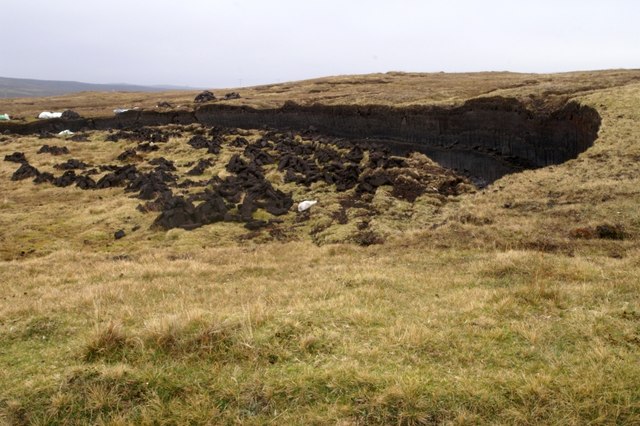
Ireland is roughly 20% peatland — one of the highest proportions of any country in Europe. But centuries of hand-cutting, machine harvesting, and drainage have left the vast majority of that bog degraded. Raised bogs that took 10,000 years to form were stripped down to bare cutaway in a matter of decades. The result was a landscape that stored almost no carbon, held almost no water, and supported very little life.
That story is now changing, and the implications for Ireland's bees, butterflies, and other pollinators are significant.
The Scale of the Opportunity
When Bord na Mona ceased peat harvesting in 2020, it left behind approximately 33,000 hectares of cutaway bog across the midlands — an area larger than all of Dublin city. Through the Peatlands Climate Action Scheme (PCAS), backed by an investment of EUR108 million, these industrial peatlands are being rewetted, stabilised, and allowed to regenerate.
It is one of the largest rewilding projects in Europe, and it is happening right here in Ireland.
Beyond Bord na Mona's lands, the EU Nature Restoration Law — which entered into force in 2024 — mandates that member states restore at least 30% of drained peatlands by 2030, with a longer-term target of 70% by 2050. For Ireland, with its enormous peatland resource, this is both a legal obligation and a once-in-a-generation ecological opportunity.
Why Bogland Matters for Pollinators
Restored and transitioning bogland is not the barren landscape many people assume. As water levels rise and vegetation returns, a distinctive community of native wildflowers establishes itself — plants that are perfectly adapted to wet, acidic, nutrient-poor conditions and that provide outstanding forage for pollinators.
Five species in particular are worth knowing:
- Ragged Robin (Silene flos-cuculi) — a gorgeous pink flower of wet meadows and bog margins, beloved by long-tongued bumblebees
- Meadowsweet (Filipendula ulmaria) — clouds of creamy, fragrant flowers that attract hoverflies, solitary bees, and beetles throughout summer
- Devil's-bit Scabious (Succisa pratensis) — rich purple flower heads that bloom late into autumn, providing crucial late-season nectar
- Purple Loosestrife (Lythrum salicaria) — tall magenta spikes along ditches and wet margins, a magnet for bumblebees
- Marsh Marigold (Caltha palustris) — one of the earliest flowers to bloom in spring, offering vital forage when little else is available
Together, these species provide a nectar and pollen supply from early spring right through to late autumn — exactly what pollinators need.
The Marsh Fritillary Connection
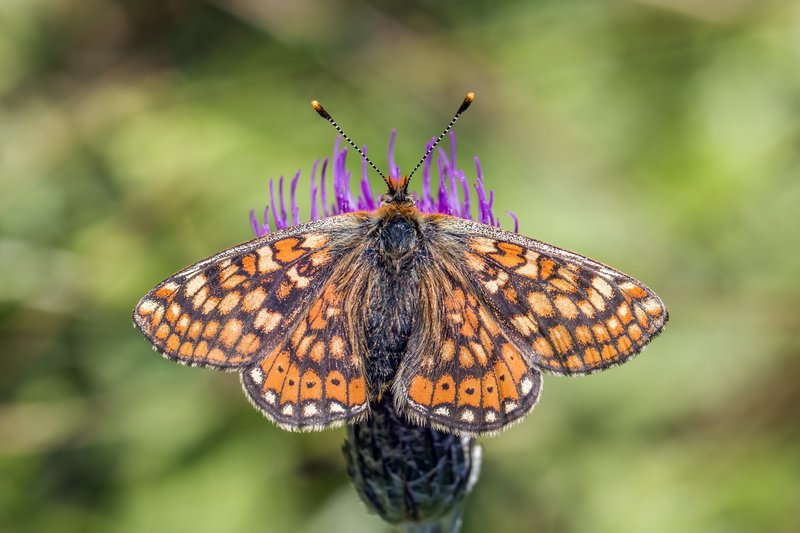
Of all the links between bogland wildflowers and pollinators, one stands out. Devil's-bit Scabious is the sole larval food plant of the Marsh Fritillary butterfly — Ireland's only legally protected butterfly species, safeguarded under both the Wildlife Act and the EU Habitats Directive.
Marsh Fritillary populations have declined sharply across Europe, and in Ireland their survival depends almost entirely on the presence of Devil's-bit Scabious growing in damp grassland and bog margins. Every patch of this plant on restored peatland is potential breeding habitat for one of our most threatened insects.
When you plant Devil's-bit Scabious on or near bogland, you are not just supporting bees — you are directly sustaining the lifecycle of a protected butterfly.
What to Plant and When
If you have access to cutaway bog, bog margins, or any damp, low-fertility ground, establishing native wildflowers is surprisingly straightforward. The key is to work with the conditions rather than against them.
Timing: Sow in either autumn (September to October) or spring (March to April). Autumn sowing allows seeds to undergo natural cold stratification over winter, which improves germination for many wetland species. Spring sowing works well too, particularly if the ground is moist.
Soil preparation: Cutaway bog often has a loose, peaty surface that needs minimal preparation. If there is a crust of moss or rank vegetation, lightly rake or scarify the surface to expose bare peat. Do not add fertiliser — bogland wildflowers are adapted to low-nutrient conditions, and adding nutrients will only encourage grasses and docks to outcompete them.
Sowing: Scatter seed at a rate of roughly 3-5 grams per square metre. Mix seed with dry sand to help achieve even coverage, especially on windy days. Press or roll the seed gently into the surface — good seed-to-soil contact is essential, but the seed should not be buried.
Aftercare: In the first year, if grasses grow tall and begin to shade the establishing wildflowers, cut them back to about 10cm in late summer. From year two onward, a single annual cut in late August or September — with cuttings removed — will maintain the meadow and prevent scrub from taking over.
Supporting Pollinators on Bog Margins
You do not need to own a cutaway bog to make a difference. Many of the species that thrive in bogland conditions will also grow well in any damp corner of a garden, along a stream bank, or in a poorly drained field margin. Purple Loosestrife and Meadowsweet will naturalise readily along any wet ditch. Marsh Marigold is stunning at the edge of a garden pond. And Ragged Robin will establish happily in any patch of ground that stays moist through summer.
These are not difficult plants. They are native to Ireland, evolved here over thousands of years, and they want to grow. They just need the chance.
The Bigger Picture
Peatland restoration is primarily a climate story — rewetted bogs store carbon, reduce flood risk, and improve water quality. But the biodiversity benefits are enormous and often overlooked. Establishing native wildflower communities on restored peatland creates habitat corridors across the midlands, linking up fragmented populations of wild bees, butterflies, and other invertebrates.
The All-Ireland Pollinator Plan has identified farmland, roadsides, and communities as key action areas. Restored peatland deserves to be recognised alongside them as a major pillar of pollinator recovery in Ireland.
Get Started
Our Bogland Pollinator Support Mix (EUR9.50) contains a carefully balanced blend of native wildflower species selected for wet, peaty soils — including Ragged Robin, Meadowsweet, Devil's-bit Scabious, Purple Loosestrife, and Marsh Marigold. Every species is native to Ireland and sourced from Irish-origin seed.
Whether you are restoring a hectare of cutaway bog or planting a damp corner of your garden, these flowers will provide vital forage for pollinators and help sustain species like the Marsh Fritillary that depend on them.
Browse the Bogland Pollinator Support Mix | Shop our full range