The Forgotten Roots — 10 Heritage Vegetables That Deserve a Comeback
There's a strange gap in our understanding of Irish food history. We know what came after — the potato, arriving in the late sixteenth century and dominating the Irish diet for three hundred years. But what came before? What did people actually eat?
The answer is: a far more diverse range of vegetables than most of us realise. Medieval and early modern Irish and European gardens were full of roots, greens, and herbs that have since vanished from our plots and our plates. Not because they aren't delicious — they are. Not because they're hard to grow — most are easier than the crops that replaced them. They disappeared because industrial agriculture in the nineteenth and twentieth centuries favoured crops that could be machine-harvested, transported long distances, and sold in uniform sizes. The old varieties didn't fit the system, so the system forgot about them.
Here are ten heritage vegetables that deserve a place in your garden.
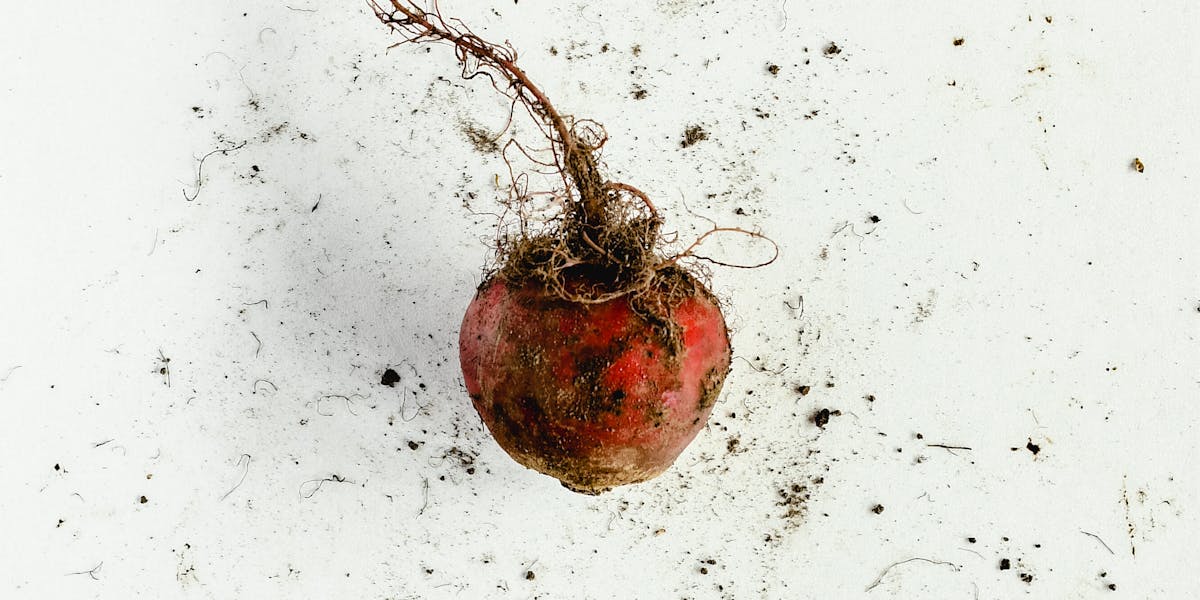
Every one of them has centuries of cultivation behind it. Every one of them grows well in Irish conditions. And every one of them tastes genuinely good.
1. Skirret (Sium sisarum)
Skirret was one of the most popular root vegetables in Europe before the potato arrived. The Romans grew it, Tudor kitchen gardens prized it, and it was cultivated in Ireland well into the eighteenth century. Then the potato — easier to grow in bulk, higher-yielding — swept it aside.
Which is a shame, because skirret has a flavour unlike any modern root vegetable: intensely sweet, with a clean, almost parsnip-like quality but sweeter and more delicate. The roots are slender and grow in clusters, so you won't get the chunky uniformity of a carrot — but you will get a flavour that genuinely surprises people.
Skirret is a perennial, so once established it comes back year after year. It prefers moist, rich soil and is perfectly happy in Irish conditions. Harvest the outer roots and leave the crown to regrow.
2. Good King Henry (Chenopodium bonus-henricus)
Good King Henry is the ultimate dual-purpose heritage vegetable. The young spring shoots, if blanched by earthing up the crowns, taste remarkably like asparagus. The arrow-shaped summer leaves cook down like a mild, earthy spinach. One plant, two crops, year after year — it's a perennial that asks almost nothing of you.
This was a cottage garden essential across Britain and Ireland for centuries. It tolerates poor soil, doesn't mind partial shade, and once established is virtually indestructible. It's the kind of plant that makes you wonder why we ever stopped growing it.
Browse our Good King Henry Seeds
3. Scorzonera (Scorzonera hispanica)
Scorzonera — sometimes called black salsify — is a long, black-skinned root with white flesh and a flavour that's difficult to describe but easy to love: nutty, sweet, with hints of hazelnut and asparagus. It was a staple of European kitchen gardens from the sixteenth century onwards and remains popular in France and Belgium today.
In the kitchen, scorzonera is superb roasted, sautéed in butter, or added to gratins. The roots are slender and long, so they need a deep, stone-free bed — much like parsnips. Sow in spring, harvest from autumn onwards. The flavour improves after frost.
4. Salsify (Tragopogon porrifolius)
Salsify is scorzonera's close relative, with pale-skinned roots and a delicate flavour often described as "oyster-like" — hence its old name, the oyster plant. Whether you taste oysters or not, salsify has a subtle, refined flavour that works beautifully in soups, mash, and roasted alongside other winter roots.
Like scorzonera, salsify needs deep soil and patience — sow in April, harvest from October. The purple flowers are also attractive and edible, making it a handsome plant as well as a useful one. The young shoots, forced in winter, can be eaten as a salad green called "chards."
5. Lovage (Levisticum officinale)
Lovage is medieval celery — but bigger, bolder, and far easier to grow. This towering perennial (it can reach two metres) has a powerful celery-like flavour that works in soups, stocks, stews, and anywhere you'd reach for a head of celery. A single leaf added to a pot of soup gives a rich, savoury depth.
Lovage was a staple of monastic herb gardens across Europe and was widely grown in Ireland. It's completely hardy, comes back reliably every spring, and is effectively unkillable. One plant is usually enough for a household — the flavour is strong. The hollow stems also make surprisingly good natural drinking straws for Bloody Marys, if you're so inclined.
6. Alexanders (Smyrnium olusatrum)
Before celery was bred into the mild, crunchy vegetable we know today, alexanders filled the same role in the kitchen. The Romans brought it to Ireland as a pot herb, and it became so widely grown in monastic gardens that it naturalised along the Irish coastline, where it still thrives today.
Young stems can be peeled and steamed. Leaves add a bold, celery-parsley flavour to soups and stews. Flower buds make an unusual pickle. The flavour is stronger and more complex than modern celery — more aromatic, with a hint of myrrh. It's a biennial, so sow in autumn for harvest the following spring.
7. Welsh Onion (Allium fistulosum)
Despite the name, the Welsh onion has nothing to do with Wales — "Welsh" here comes from an old Germanic word meaning "foreign." This is a perennial bunching onion that has been cultivated in Europe and Asia for over two thousand years. Unlike ordinary onions, it doesn't form a bulb. Instead, it produces clumps of hollow green stems that you harvest like spring onions — and it keeps producing them, year after year after year.
Welsh onions are the most reliable allium in the garden. They're frost-hardy, slug-resistant, and virtually indestructible. Divide the clumps every few years and you'll have a permanent supply of fresh, mild onion greens whenever you need them.
8. Fat Hen (Chenopodium album)
Fat hen may be the world's oldest vegetable. Archaeological evidence shows it was gathered and cultivated from at least the Iron Age, and its seeds have been found at ancient sites across Ireland, Britain, and continental Europe. It was the spinach of the ancient world — and in many ways, it's better than spinach.
The leaves are mild-flavoured and higher in protein, calcium, and iron than spinach. They cook down beautifully and work in any recipe that calls for spinach or chard. Fat hen grows readily from seed and self-sows with enthusiasm, so once you have it, you'll always have it. Its close relative quinoa has conquered the health food world; fat hen is every bit as worthy.
9. Sea Kale (Crambe maritima)
Sea kale was a prized delicacy of the eighteenth and nineteenth centuries. In grand kitchen gardens across Britain and Ireland, it was "forced" — covered with large clay pots in late winter to produce tender, blanched shoots that were steamed and served with melted butter. The flavour is delicate and slightly nutty, with a texture like tender broccoli stems.
Sea kale grows wild on British and Irish shingle beaches, though it's now uncommon enough to be legally protected in the wild. Fortunately, it grows beautifully in the garden. It wants well-drained, sandy soil and full sun. It's a perennial, so once established it produces its luxury crop every spring with no replanting needed.
10. Medlar (Mespilus germanica)
The medlar is the oddest fruit you'll ever eat — and one of the most rewarding. This small, ancient tree produces hard, brown fruits in autumn that are completely inedible when picked. They need to be "bletted" — left to soften through a controlled decomposition that transforms their flesh into something that tastes like spiced apple butter with hints of wine and dates.
Medlars were hugely popular in medieval and Tudor gardens. Shakespeare mentions them; Chaucer mentions them. They fell from fashion because, frankly, a fruit you have to let rot before eating is a hard sell in a supermarket. But grow your own, blet them on a windowsill, and scoop out the flesh — and you'll understand why people loved them for centuries. Medlar jelly is also exceptional: amber-coloured, fragrant, perfect with cheese and cold meats.
These Are Not Novelties
It's worth saying clearly: these aren't quirky curiosities for adventurous gardeners. Every plant on this list was a mainstream food crop for centuries. Skirret fed more Europeans than the potato ever did, just over a longer timescale. Fat hen nourished people for thousands of years before spinach existed in European gardens. Lovage was as common as parsley.
They disappeared from our gardens not because they aren't productive or delicious, but because they didn't suit the economics of industrial-scale agriculture. A skirret root is too small and irregular for a supermarket shelf. A medlar needs to be bletted, and you can't automate patience. Fat hen self-seeds too enthusiastically for a tidy field operation. None of these are problems in a home garden — they're advantages.
Growing heritage vegetables is a way of preserving genetic diversity, reconnecting with food traditions that stretch back centuries, and eating things that genuinely taste extraordinary. And in a time when we're all thinking more carefully about resilience, sustainability, and the fragility of modern food systems, there's real value in keeping these old varieties alive.
Browse our Heritage Seed Collection | Read our Heritage Growing Guides