Your Pollinator Garden Month by Month — A Calendar for Ireland
One of the best things about gardening for pollinators in Ireland is that there is always something to do — and always something to look forward to. The Irish climate gives us a long growing season and mild winters, which means pollinators can be active from February right through to November if the right food is there for them.
This month-by-month calendar will help you keep track of what's blooming, what needs doing, and how to make your garden as useful as possible for bees, hoverflies, and butterflies throughout the year.
January and February — Plan, Order, and Leave Things Be
The garden is quiet, but not dormant. Snowdrops push through in January, and by February winter heather (Erica carnea) is offering some of the first nectar of the year. Pussy willow catkins begin to swell towards the end of February, and these are a lifeline for the earliest emerging insects.
This is your time to plan. Think about what worked last year and what gaps your garden had. Were there bare weeks in late summer when nothing was in flower? Did you have enough early spring colour? Order your wildflower seed now so you're ready to sow in March.
One of the most important things you can do in these months is nothing at all. Leave the leaf litter where it is. Leave hollow stems standing. Ladybirds, hoverflies, and solitary bees are overwintering in exactly those spots, and a tidy garden in January is a deadly garden for insects.
March — The First Queens and the First Sowings
March is when the year truly begins for pollinators. The first bumblebee queens emerge from hibernation — often buff-tailed bumblebees — and they are desperately hungry after months underground. Dandelions are their first reliable meal. Lesser celandine carpets hedgebanks in gold. Blackthorn bursts into white blossom along every roadside.
If you've been waiting to sow wildflower seed, this is your moment. Prepare your ground — rake it bare, scatter the seed, and press it in with your feet or a roller. Good seed-to-soil contact is everything. And whatever you do, don't mow. Those dandelions you might be tempted to cut are keeping bees alive.
April — Spring in Full Swing
Primroses light up woodland edges and hedgerows. Cowslips appear on banks and in old meadows. Wild garlic fills damp woods with its white flowers and unmistakable scent.
Solitary bees are nesting now — mining bees dig tiny holes in bare soil and south-facing banks, while mason bees seek out hollow stems and crevices in walls. This is a good time to set up a bee hotel if you haven't already. Face it south-east so it catches the morning sun, and mount it at least a metre off the ground.
May — Peak Spring and the Hawthorn Explosion
May is glorious. The hawthorn hedgerows erupt into creamy-white blossom, filling the air with that sweet, heavy scent that is so distinctly Irish. Bluebells carpet woodland floors. Red campion, buttercups, and the first ox-eye daisies appear in meadows and along roadsides.
Mining bees are especially active now — you might notice small volcano-shaped mounds of soil on your lawn. Don't worry, they're harmless and temporary. These bees are gentle, solitary, and among the most effective pollinators you'll find. Leave them to it.
If you sowed wildflower seed in March or last autumn, you should be seeing the first green shoots now. Be patient. Wildflower meadows look underwhelming in their first spring. The real show comes in summer, and the second year is always better than the first.
June — The Meadow at Its Peak
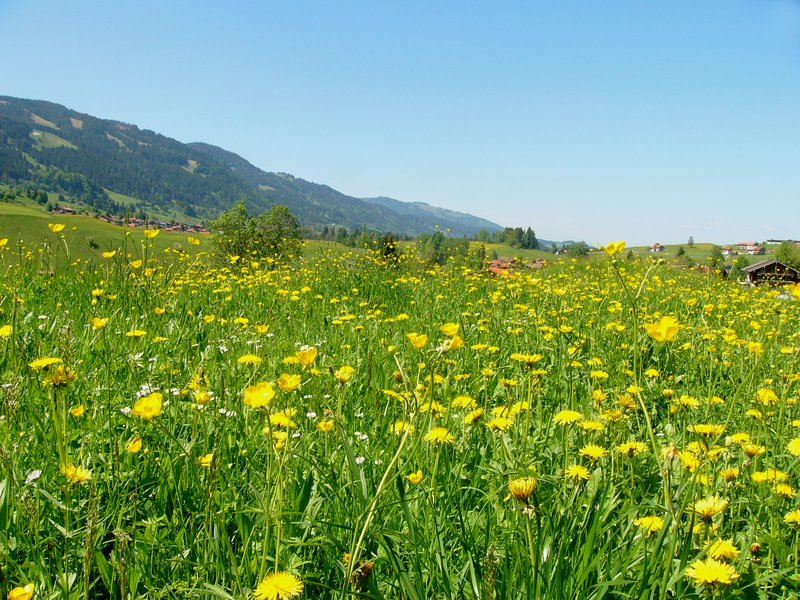
June is the month when a wildflower meadow earns its keep. Knapweed, bird's-foot trefoil, red clover, ox-eye daisy, and yellow rattle are all in bloom, creating that tapestry of colour that was once common across the Irish countryside and is now so rare.
Most wildflower species are flowering now, and the variety of pollinators visiting them is extraordinary — bumblebees, solitary bees, hoverflies, butterflies, and beetles all working the flowers.
The single most important thing you can do in June is resist the urge to cut. Meadow areas should be left alone. If you have a lawn, consider leaving even a strip or a corner to grow long through the summer. You'll be amazed what appears.
July — High Summer and Late Foragers
The meadow continues into July with meadowsweet, wild marjoram, self-heal, and — on boggy ground — bell heather adding purple to the landscape. Late-flying bumblebee species are still foraging hard, building up their colonies before the autumn decline.
If you absolutely must cut part of your garden, try to leave some areas uncut. Even a few square metres of long grass and wildflowers can sustain pollinators through the summer. Think of it as a rotating system — cut some areas, leave others, and alternate each year.
August — Meadow Cut and Late Colour
Purple loosestrife blooms along waterways and in damp corners, a vivid magenta that draws bees from a distance. Devil's-bit scabious is just starting — a plant that will become critically important in September. Up on the hills and bogs, heather turns the landscape purple.
If you haven't cut your meadow yet, August is the time. The key technique is simple but important: cut everything, then leave the cuttings lying on the ground for three to five days. This allows the seed to drop back into the soil, ensuring next year's flowers. After that, rake up and remove the cuttings. Removing the hay keeps fertility low, which is exactly what wildflowers need — they thrive on poor soil and can't compete with vigorous grasses on rich ground.
September — The Autumn Sowing Window
Devil's-bit scabious reaches its peak now, and it is one of the most important late-season wildflowers in Ireland. It's the sole food plant of the marsh fritillary butterfly and a vital nectar source for bumblebees building up their reserves before winter.
Ivy is starting to bloom too, and this is where things get serious. Ivy blossom is arguably the single most critical late-season food source for pollinators in Ireland. It feeds bees, hoverflies, butterflies, and wasps at a time when almost nothing else is flowering. If you have ivy, leave it. If you don't, consider planting some.
September is also your autumn sowing window. Many native wildflowers germinate best after a period of cold, so seed sown now will sit through winter and come up strongly in spring. Prepare the ground just as you would in March — bare soil, scatter seed, press it in.
October — Ivy and Last Preparations
Ivy is now in full bloom and it's the last major nectar source of the year. On a warm October day, a flowering ivy wall hums with life — bumblebee queens fattening up for hibernation, hoverflies, and the last butterflies of the season.
This is a good time to plant spring bulbs. Crocuses are particularly valuable because they flower early, providing nectar for the first emerging bees in February and March. Plant them in clusters in lawns, borders, or under deciduous trees.
November and December — Rest, Resist, and Reflect
The temptation in late autumn is to tidy everything up. Resist it. Leave seedheads standing — they provide food for birds through the winter, and hollow stems shelter overwintering insects. A "messy" garden in winter is a living garden.
If you grow heritage vegetables, now is the time to mulch those beds and protect the soil. But in your wildflower areas and borders, the best thing you can do is step back.
Use these quiet months to reflect on the year. What bloomed well? Where were the gaps? Did you have continuous flower from March to October? If not, what could you add? A pollinator garden improves year on year, and each season teaches you something new.
The Year-Round Principle
The thread running through every month of this calendar is simple: pollinators need food from early spring to late autumn, and they need shelter all year round. No single plant or planting covers the whole season. The goal is a succession of flowers — one thing finishing as the next begins — so there is never a hungry gap.
That's what our native wildflower seed mixes are designed to do. They contain species that bloom at different times through the season, giving you that continuous food supply without having to plan every detail yourself.
Ready to get started? Browse our wildflower seed mixes and find the right one for your garden, meadow, or farm. Whether you have a window box or ten acres, there's a mix that will bring pollinators to your door — and keep them fed all year long.