Seed Saving for Beginners — How to Harvest, Dry, and Store Your Own Seed
There is something deeply satisfying about closing the loop. You sow a seed, tend the plant, eat the harvest — and then, from that same plant, you gather seed for next year. No packet to buy. No variety to hunt down online. Just a quiet continuation of something that gardeners and farmers have done for ten thousand years.
Seed saving is not difficult. For most of human history it was simply what people did — saving seed was as ordinary as weeding or watering. The idea that you'd buy all your seed fresh every year is a remarkably recent one, driven by the rise of commercial seed companies and, later, by the development of hybrid varieties that don't breed true from saved seed.
If you've never saved seed before, this is a good time to start. Here's how.
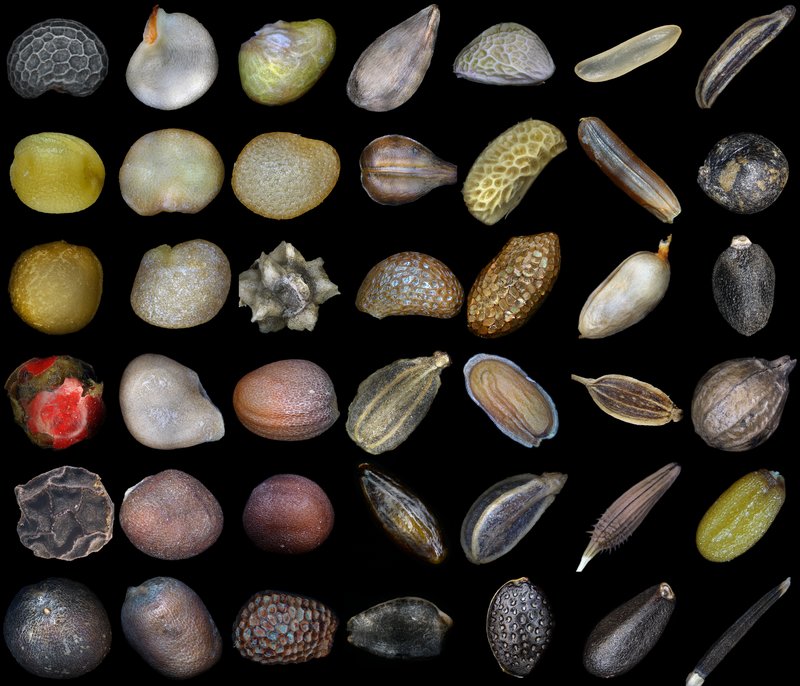
Why Save Seed at All?
There are four strong reasons.
Self-sufficiency. Once you have a reliable stock of your own seed, you're no longer dependent on seed companies, supply chains, or postal deliveries arriving on time. Your garden becomes a self-renewing system.
Preserving heritage varieties. Many old vegetable and grain varieties survive only because individual growers keep saving their seed, year after year. When the last person saving a variety stops, that variety disappears — and with it, centuries of careful selection. Every seed saver is a guardian of genetic diversity.
Local adaptation. When you save seed from plants that did well in your particular garden, in your particular soil and climate, you're selecting for success in your conditions. Over several generations, your saved seed will produce plants that are measurably better suited to where you grow than anything from a packet. This is especially powerful in Ireland, where conditions vary enormously from one townland to the next.
Saving money. A single lettuce plant allowed to bolt and set seed will produce enough seed for years. A handful of dried bean pods will give you next year's entire crop. Once you start saving, you realise how extraordinarily generous plants are.
A Word About Irish Seed Savers
If you want inspiration for seed saving in Ireland, look no further than the Irish Seed Savers Association in Scarriff, Co. Clare. For over thirty years, they've been collecting, conserving, and redistributing rare Irish vegetable, grain, fruit, and apple varieties — maintaining a living seed bank that safeguards our agricultural heritage.
They are one of our suppliers at Pollinator Seeds, and their work is a reminder that seed saving isn't just a hobby. It's a form of conservation. Every grower who saves even a few varieties is contributing to the same effort.
Start With the Easy Ones
Not all plants are equally straightforward to save seed from. The simplest are self-pollinating crops — plants whose flowers fertilise themselves before they open, so there's virtually no risk of cross-pollination with neighbouring varieties.
Beans and peas are the classic beginner crops. Simply leave some pods on the plant until they're completely dry and brown, rattling when you shake them. Shell out the seeds and store them. That's it.
Lettuce bolts readily in summer, sending up a tall flower stalk. The small, dandelion-like seed heads ripen over several weeks. Harvest them when they look fluffy and dry, rub them between your fingers to release the seed, and blow away the chaff.
Tomatoes require one extra step: scoop the seeds into a jar with a little water and leave them for two or three days until a mould forms on the surface. This fermentation process removes the germination-inhibiting gel coat. Rinse the seeds clean, spread them on a plate, and dry them thoroughly.
These four crops will give you confidence before you tackle anything more complex.
Open-Pollinated vs F1 Hybrids
This is the single most important thing to understand about seed saving: only open-pollinated varieties breed true from saved seed.
Open-pollinated varieties are stable. The seeds they produce will grow into plants essentially the same as the parent. All heritage and heirloom varieties are open-pollinated — they've been maintained by generations of growers doing exactly what you're about to do.
F1 hybrid varieties are a cross between two different parent lines. They often perform well in the first generation, but seed saved from F1 plants will produce a chaotic mix of offspring, most of them inferior to the parent. You cannot reliably save seed from F1 hybrids.
When buying seed, look for the words "open-pollinated," "OP," or "heritage" on the packet. Our entire range at Pollinator Seeds is open-pollinated — every variety we sell is suitable for seed saving.
Watch Out for Cross-Pollination
While beans, peas, lettuce, and tomatoes are forgiving, other crops are promiscuous. Brassicas (cabbage, kale, broccoli, turnip) will all cross-pollinate with each other freely, producing unpredictable offspring. Squash and courgettes cross readily within their species. Sweetcorn is wind-pollinated and will cross with any other sweetcorn variety within several hundred metres.
If you want to save pure seed from these crops, you'll need either isolation distances (growing only one variety of each species, or separating varieties by a considerable distance) or hand pollination (manually transferring pollen and then covering the flower to exclude insects). These techniques are well worth learning, but they're second-year skills. Start with the self-pollinators and work up.
The Practical Steps
Whatever you're saving, the basic process is the same.
Let it ripen fully. Seed needs to mature on the plant. For beans and peas, this means leaving pods until they're papery and dry. For tomatoes, peppers, and squash, let the fruit reach full maturity — overripe is better than underripe for seed-saving purposes. For lettuce, wait until the seed heads are fluffy.
Harvest on a dry day. Moisture is the enemy of stored seed. Pick your seed pods, heads, or fruits on a dry afternoon when any dew has long since evaporated.
Clean and separate. Remove seeds from pods, fruits, or seed heads. Winnow away the chaff — for small seeds, gently blowing across a plate works well. For larger seeds like beans, simply shell them out by hand.
Dry thoroughly. This is the step people most often rush. Spread seeds in a single layer on plates, trays, or sheets of newspaper in a warm, dry, well-ventilated room. Leave them for two to three weeks. Seeds that aren't fully dry will rot or develop mould in storage.
Store well. Paper envelopes are ideal — they breathe, which prevents moisture from being trapped. Avoid plastic bags or sealed containers unless you're absolutely certain the seed is bone-dry. Store your envelopes in a cool, dry, dark place. A drawer, a tin, a shoebox in a cupboard — nothing fancy is needed.
Saving Wildflower Seed
Wildflower seed saving is even simpler than vegetables, because the plants do most of the work themselves. Leave flower heads on the plant until they've turned brown and dry. On a still, dry day, cut the heads and drop them into a paper bag. Leave the bag open in a warm room for a week or two, then shake it to release the seeds.
Many wildflowers — knapweed, ox-eye daisy, red clover, yarrow — respond well to autumn sowing. Scatter the saved seed where you want it to grow, press it lightly into the soil, and let winter's rain and frost do the rest. This mimics the natural cycle and often gives better germination than spring sowing.
Heritage Grains
If you're growing heritage grains like einkorn or emmer, seed saving is built into the harvest itself. Cut the stalks when the grain is hard and dry. Thresh by beating the stalks against the inside of a clean bin or bucket — the grain will fall free. Winnow by pouring the grain slowly from one container to another in a light breeze, letting the wind carry away the lighter chaff while the heavy grain falls straight.
Store dry grain in paper or cloth bags in a cool place. It will keep for years and can be sown, milled, or eaten.
Always Label
This sounds obvious, but it's the step most often forgotten in the satisfaction of the moment. Write on every envelope: the variety name, the date of harvest, and any notes you think might be useful — "good flavour," "early to mature," "survived the wet July." These notes become invaluable over the years as you build up your own locally adapted seed stock.
How Long Does Seed Last?
Most vegetable seeds, stored properly, remain viable for two to five years. Some are remarkably long-lived — tomato and brassica seed can last a decade. Others are short-lived: parsnip and onion seed are notoriously poor keepers, often lasting only a single year. If in doubt, sow a little of your saved seed on damp kitchen paper to test germination before committing it to the garden.
Share What You Save
One of the most encouraging developments in Irish growing in recent years is the spread of community seed swaps and seed libraries. These informal gatherings — often held at farmers' markets, community gardens, or libraries — let growers exchange saved seed, share knowledge, and keep rare varieties in circulation.
If there isn't a seed swap near you, consider starting one. It takes nothing more than a few growers, a table, and a collection of labelled envelopes. The conversations that happen around a seed swap table are worth as much as the seeds themselves.
Start This Season
You don't need to save seed from everything you grow. Start with one or two crops — a favourite bean variety, a lettuce that did well, a wildflower patch you'd like to spread. Do it once, and you'll understand why people have been doing it for millennia. There is a quiet confidence that comes from knowing you can keep your garden going, year after year, from your own saved seed.
Every open-pollinated variety in our Heritage Seed Collection is suitable for seed saving. Browse the range, pick something you'd like to grow and keep, and begin.
Browse our Heritage Seed Collection | Visit Irish Seed Savers Association